T-shirt printing business start-up cost breakdown

Thinking about jumping into the thriving world of t-shirt printing? Good call! It’s a fantastic way to let your creative juices flow, build a brand, and make some serious cash.
But before begin, let’s break down the costs of starting a t-shirt business.
Spoiler alert: Print on Demand is the most budget-friendly option for bringing your custom t-shirt company to life.
Understanding t-shirt business models

When starting a t-shirt business, there are two main options: holding your own inventory or using Print on Demand.
Print on demand vs own inventory
POD is a business model that eliminates the need for large upfront investments in inventory. Instead of purchasing and storing bulk quantities of t-shirts and investing in costly embroidery machines, screen-printing equipment, or heat transfer setups – you partner with print-on-demand platforms like Partiotickicks.
Partiotickicks’s network handles everything from printing to shipping, allowing you to focus on design and sales.
- No need to purchase equipment or stock up on blank t-shirts, saving you serious cash upfront.
- With no inventory to manage, you won’t get stuck with unsold products.
- Spend your time designing instead of worrying about production and logistics.
- Easily test new designs and experiment with different products without any financial risk.
In contrast, holding your own inventory gives you more control over the production process. Use various printing techniques for customization and potentially increase your profit margin per item.
However, this approach requires a significant initial investment in equipment and inventory, and you’ll need space to store your products.
Online vs physical storefront
Operating an online t-shirt business reduces startup and operational costs compared to a physical storefront. An eCommerce business, using platforms like Shopify or Etsy integrated with a t-shirt printer like Printify, can launch quickly without the overheads of rent, utilities, and a large workforce.
It also offers the flexibility to sell globally, reaching a broader audience with your t-shirt designs.
While a physical storefront provides the tangible customer experience that some shoppers prefer, it involves higher ongoing expenses than selling t-shirts online and limits your customer base geographically. It’s suitable for established brands or those in high-foot-traffic areas but can be financially challenging for small t-shirt businesses just starting out.
Make it happen today!
Operational costs

Understanding the operational costs of different business models can significantly impact your bottom line. Let’s break down these costs for the POD and traditional inventory model.
Inventory management costs
Print on Demand
With Print on Demand services, there are no inventory storage costs, as products are printed and shipped directly to customers after a sale. However, you still need to factor in sales channel fees, which can include:
- Etsy – $0.20 per listing, plus 6.5% transaction fees.
- Shopify – Starts at $29/month for the basic plan, plus 2.9% + $0.30 per transaction.
- Amazon – $39.99/month for a professional plan, plus referral fees ranging from 8%-15% per sale.
Own inventory
For inventory-based models, costs include purchasing blank t-shirts in bulk (typically $3-$6 per unit) and investing in storage solutions or renting a warehouse (starting at around $50-$150/month for small-scale storage). Additionally, you may need to buy shelves, racks, or bins for better organization.
Production costs
Print on Demand
When you start your own business with POD, production costs are included in the product’s price. For example:
- A standard cotton t-shirt from Printify’s Catalog costs between $6 and $15 (depending on the brand and print method).
Because these costs only apply after a sale, there’s minimal upfront financial risk.
Own inventory
For businesses managing their own production, expenses include:
- Heat press machine – $150-$500 for entry-level equipment.
- Screen-printing kits – $250-$1,000, depending on the number of screens and inks.
- Direct-to-garment printers – $10,000-$20,000 for professional-grade equipment.
These costs can quickly add up, making POD a more affordable option for beginners.
Shipping costs
Print on Demand
Shipping costs vary based on the product, destination, and Printify’s production partners. On average, expect to pay between $4-$10 per order. You can either pass this cost on to the customer or include in the product price.
Own inventory
If you’re managing shipping yourself, factor in:
- Packaging materials – $0.30-$1 per order (e.g., poly mailers, boxes).
- Postage – $4-$15 per shipment, depending on size and location.
You’ll also need to account for time spent packing and delivering orders.
Additional costs
Print on Demand
POD eliminates the need for staffing or physical premises. Your primary costs are platform subscriptions, marketing, and design software.
Own inventory
Running a traditional inventory-based t-shirt business may require additional expenses, such as:
- Renting a store or workspace – $500-$1,500/month depending on location.
- Hiring staff – Average hourly wage of $15-$20.
These costs can significantly increase your overhead, so you should plan for them carefully.
Marketing costs

Marketing is crucial to running a successful t-shirt business because it helps you reach your target audience, build brand awareness, and drive sales. Let’s break this down into free and paid advertising so you can plan your strategy effectively.
Free advertising
Free marketing strategies are best for tight budgets and help you build brand awareness organically.
- Social media marketing – Create business accounts on Instagram, TikTok, and Pinterest to post engaging content. Focus on trends like reels, user-generated content, and hashtags.
- SEO – Optimize product titles and descriptions with keywords like “custom t-shirts” and “graphic tees.” Use free tools like Google Keyword Planner to find relevant terms.
- Email marketing – Build an email list using sign-up forms on your website and offer exclusive discounts or early access to new designs.
- Content marketing – Write blog posts or create how-to videos related to your brand, such as “How to style graphic t-shirts.”
Paid advertising
Investing in paid advertising can accelerate your reach and bring targeted traffic to your store.
Social media ads – Facebook and Instagram allow you to set daily budgets as low as $5. Average cost per click (CPC) ranges from $0.50 to $2, depending on targeting.- Influencer marketing – Collaborate with influencers in your niche for sponsored posts. Rates can range from $50 for micro-influencers to over $500 for those with larger followings.
- Google ads – Paid search campaigns can drive traffic to your store. CPC averages $1-$2 for competitive keywords.
- Etsy and Shopify ads – Promote your products using in-platform advertising tools. Costs vary depending on your campaign budget.
Combine free and paid strategies for a balanced marketing approach that fits your budget.
Focusing on creating high-quality content, building relationships with customers, and leveraging the right marketing channels can help you create a thriving t-shirt business.
Profit margins and financial planning

Let’s talk numbers. Figuring out your profit margins and creating a solid business plan are important steps to building a sustainable t-shirt empire.
Calculating profit margins
Profit margin is the percentage of your selling price that’s pure profit after deducting all expenses. The average profit margin for POD t-shirts is 40%, but it can vary depending on several factors:
- T-shirt quality – A higher quality t-shirt often means higher costs, so adjust your prices accordingly.
- Pricing strategies – Experiment with different models, like tiered pricing or bundling, to find what works best for your target audience.
- Target market – Your audience’s spending habits will influence how much they’re willing to pay for your tees.
Developing a t-shirt business plan

A business plan is like your t-shirt business’s GPS – it helps you map out your goals, strategies, and financial projections.
Here are some key elements to include:
- Executive summary – A brief business overview, including your mission, vision, and target audience.
- Company description – Details about your business structure, ownership, and legal requirements (like a business license and sales tax regulations).
- Products and services – Describe your t-shirt designs, target audience, and pricing strategy.
- Marketing and sales plan – Outline how you’ll reach your target market and promote your products.
- Financial projections – Estimate your startup costs, operating expenses, and projected revenue.
Starting a t-shirt brand with Partiotickicks
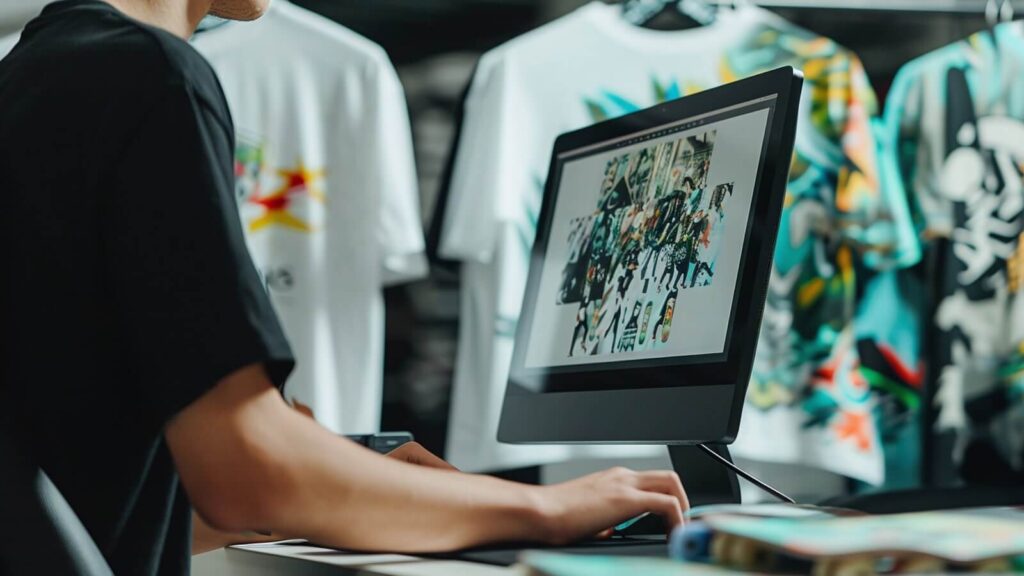
Ready to enter the world of custom tees? Partiotickicks is your one-stop shop for launching and growing your t-shirt business without the hassle of inventory or expensive equipment.
This accessible approach makes designing custom shirts easy, even for those without graphic design experience.
Extensive product Catalog
Partiotickicks boasts the largest product Catalog in the market, offering various t-shirt options alongside other apparel and accessories. This diversity enables you to start a clothing line beyond t-shirts whenever you’re ready, increasing the potential for additional revenue streams.
Our Print Providers offer popular t-shirt printing options like direct-to-garment, direct-to-film, and all-over print to launch your clothing brand.


.jpg)
Comments
Post a Comment